Contact lenses or glasses? A practical comparison before you decide
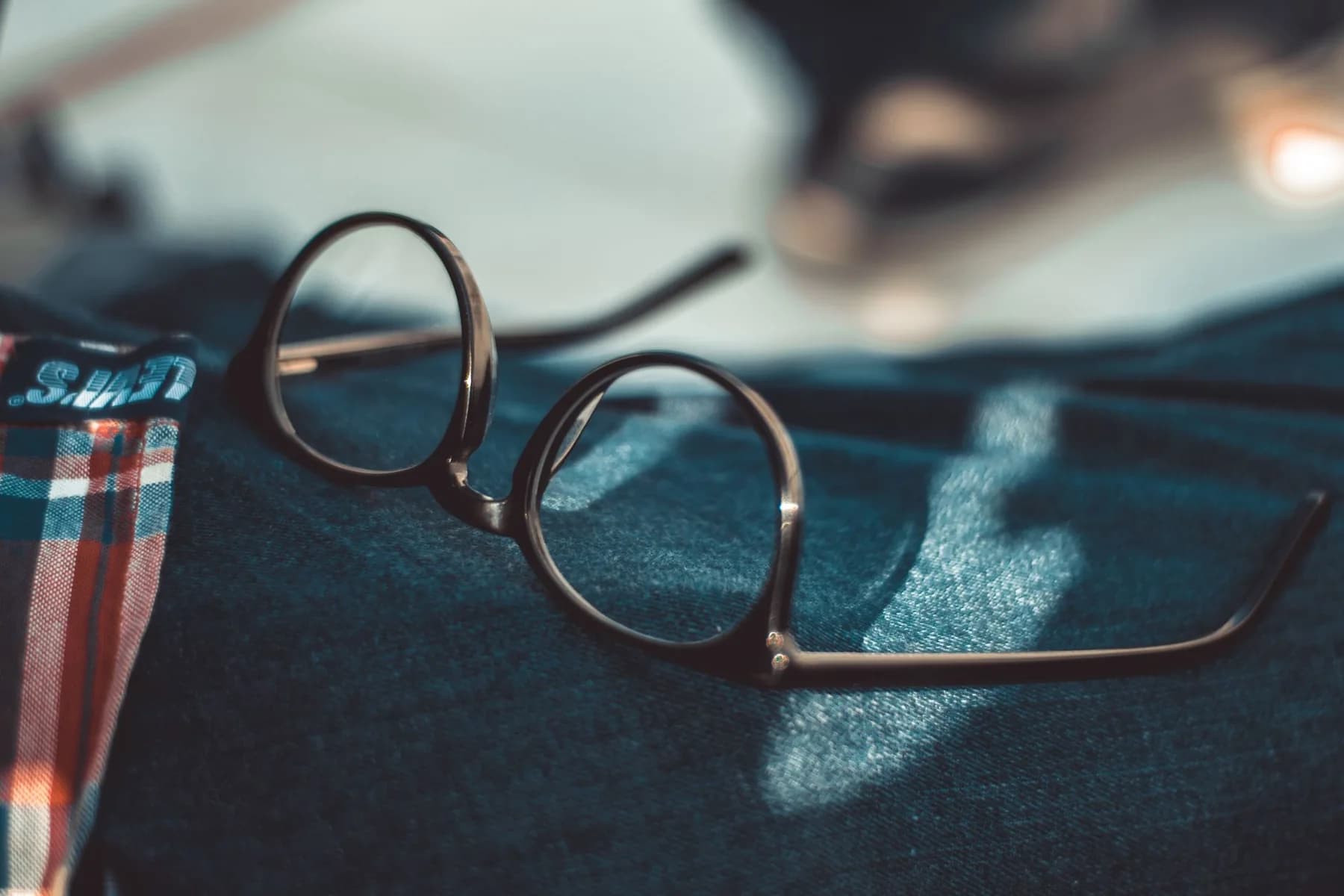
It comes up in almost every optical practice: should I switch to contact lenses or stick with glasses? The honest answer is that this is not a contest with one winner. Each option is clearly better at some things and clearly worse at others, and the right choice depends on your prescription, the shape of your day and your patience for a daily routine far more than on how you look. In this guide we lay the differences out plainly: what you gain from each option, what you pay for it, and how to avoid the common mistakes that make contact lenses an unnecessarily bad experience. Above all: a contact lens is a medical device placed directly on the surface of your eye, not an accessory — so it is never bought or worn without an exam and a proper fitting by a specialist, however simple the process looks.
The differences in vision itself
Because a contact lens moves with the eye and stays centred on your line of sight, it gives a full field of view with no rim cutting across it and no change in image size toward the edges. The difference is barely noticeable with mild prescriptions, but it becomes very obvious as the power climbs. A pair of glasses, by contrast, sits at a distance from the eye — and that same distance is what makes them easier and safer to live with day to day.
- Field of view: contacts win clearly, especially in peripheral vision and when you turn your head quickly during sport or driving.
- Image size: strong powers in glasses magnify or shrink the image slightly, while a contact lens keeps things close to their natural size.
- A big difference between the two eyes: contacts are often more comfortable here, because the brain fuses the two images more easily.
- Astigmatism: correctable both ways, but a toric contact lens has to stay stable on the eye, so it may take more than one fitting to get right.
- Steady clarity: glasses don't shift or dry out, so their clarity holds steady all day without fluctuation.
Comfort and daily use
This is where environment matters most. Hot dry air, dust and constant air conditioning all pull moisture off the surface of the eye — exactly the conditions that make contact lenses feel unpleasant after a few hours. That doesn't make them unsuitable; it means the lens type and the daily wearing time need to be chosen carefully, and that long evening hours in front of a screen are their hardest stretch, because your blink rate drops.
- Glasses go on and come off in a second — no hand-washing, no solution, no time in front of a mirror.
- Contacts don't fog when you step from air conditioning into heat, and they aren't affected by rain or by sweat during exercise.
- Contacts don't slide or press on your nose and ears, and they sit comfortably under a helmet, swim goggles or a face mask.
- Glasses physically shield the eye from dust, sand and direct wind — a genuine advantage on a gusty day.
- Dryness and redness late in the day is one of the most common reasons people give up on contacts; usually the fix is fewer wearing hours, not abandoning them.
Care and safety: the difference that actually matters
The biggest gap between the two options is not clarity or price — it is margin for error. Neglect a pair of glasses and they simply get dirty; neglect a contact lens and that neglect sits directly on the surface of your eye. The overwhelming majority of contact lens problems come not from the lens but from habits: sleeping in lenses that aren't meant for it, wearing them past their replacement date, letting them touch water, or topping up old solution instead of replacing it. Respect those points and the experience is safe and easy; ignore them and you get the horror stories.
- Wash and dry your hands thoroughly before every single time you touch a lens — no exceptions.
- Never let lenses meet water: no showering in them, no swimming, and never rinse them under the tap.
- Stick to the stated replacement schedule (daily, two-week, monthly); stretching it isn't saving money, it's taking a risk.
- Use fresh solution every time, clean the case and replace it regularly; a neglected case is a repeat source of contamination.
- At any pain, redness, blurring or light sensitivity: take the lens out immediately, don't put it back, and see a specialist.
- Always keep a backup pair of glasses ready; you will need them on dry, infected or simply exhausted days.
Cost over the long run
Price comparisons mislead because they set a one-off purchase against a recurring one. Glasses cost more up front and then almost nothing after, and can stay with you for years if your prescription holds. Contacts are cheaper the first time but they are a subscription: repeat boxes, solution, periodic fitting checks — and you still need a backup pair of glasses regardless. The fair way to compare is to price a full year rather than day one, remembering that daily disposables cost more per month but demand the least care.
Who suits which option?
Most people who try both settle on a mix: glasses for the bulk of the day, contacts for specific situations. That isn't indecision — it's using each tool where it actually performs best.
- Sport, fast movement and outdoor activity: contacts, with sunglasses over them for UV protection.
- Long office days and screens: glasses are more comfortable, especially in dry air-conditioned spaces.
- Anyone with dry eye or seasonal allergies: glasses as the default, contacts for limited occasions if a specialist agrees.
- Children and teens: it depends on how responsible they are about hygiene more than on age itself, and the call belongs with a specialist.
- Anyone who doesn't want an extra daily routine: glasses, without hesitation.
The useful question isn't which is better, but which suits this particular day. Start with an exam and an up-to-date prescription, ask your specialist directly how many hours of wear suit you, and keep both options within reach. The right tool is the one you actually use comfortably — not the one that looks better on paper.
Frequently asked
Do contact lenses weaken your eyesight over time?+
No — lenses don't change your refractive power. Prescriptions shift for reasons related to age and the eye itself, whether you wear contacts, glasses or nothing at all. What poor use can cause is irritation or problems on the eye's surface, which is a completely different matter.
Does my glasses prescription work for contact lenses?+
Not exactly. A contact sits directly on the eye while glasses sit at a distance, so the power can differ slightly in stronger prescriptions, and a lens also needs extra measurements for its diameter and curvature. That's why a separate contact lens fitting is required.
How many hours a day can I wear contacts?+
It varies by lens type and by your eyes, but the practical rule is to stop at the first sign of dryness or discomfort rather than pushing to a fixed number of hours. In hot dry conditions many people cut their hours and switch to glasses late in the day.
Do contact lenses protect against sunlight?+
Some types offer partial protection for the area they cover only — they don't shield the white of the eye, the lids or the surrounding skin. Full UV-blocking sunglasses over your contacts remain necessary, not optional.