How to protect your eyes on desert trips and camping: sun, sand, wind and campfire smoke
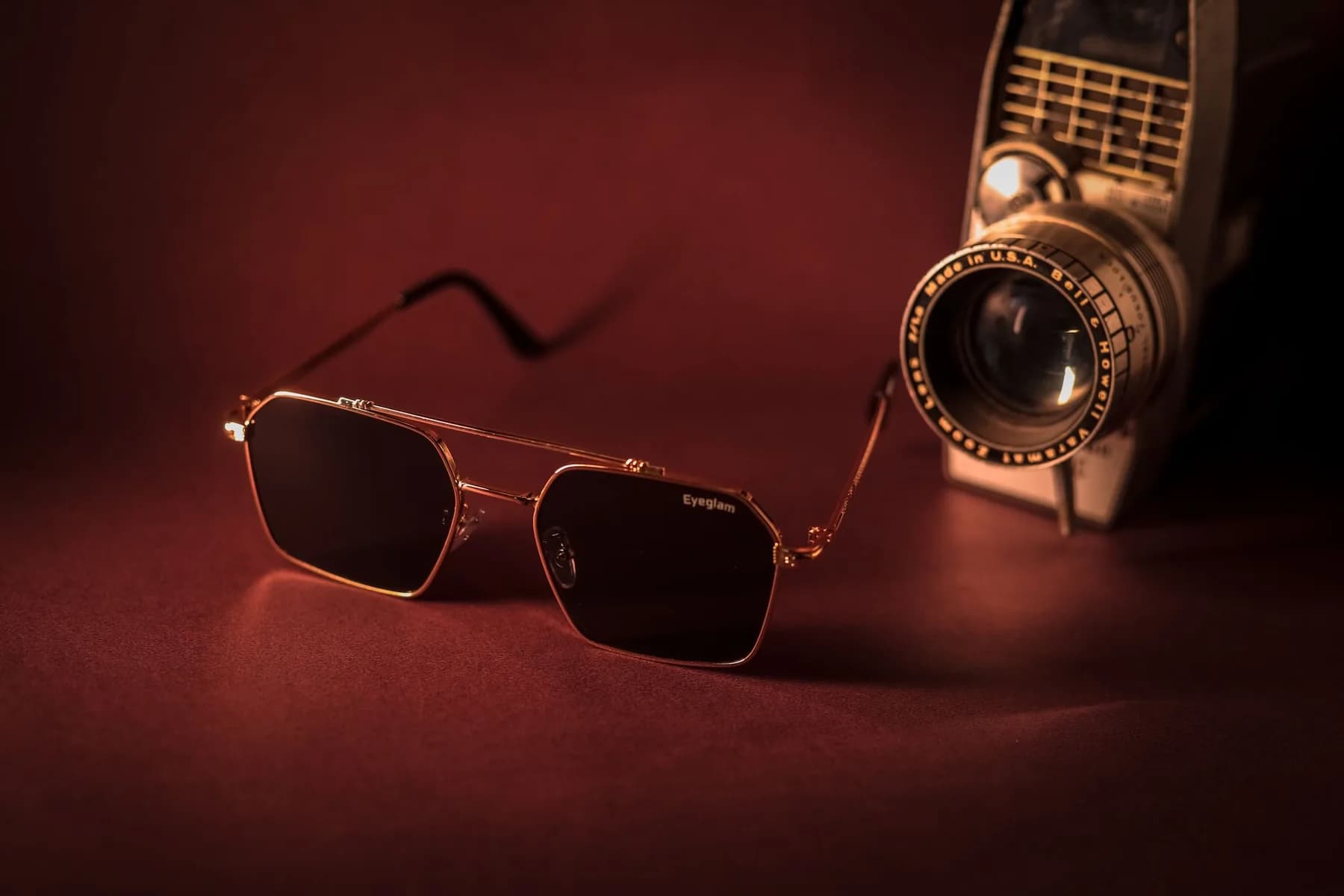
Protecting your eyes on a desert trip comes down to four things: sunglasses that block 100% of UV, with a category 3 lens in a frame that wraps around the face; a wide-brimmed hat or a shemagh that shades the eyes; sealed goggles whenever you ride through dust or wind; and a small kit for whatever still gets in: clean water, preservative-free lubricating drops and a spare pair of prescription glasses if you wear them. The desert is harder on the eyes than the city because light reaches them twice, from the sky and reflected off the sand, while wind, dry air and campfire smoke keep irritating the surface of the eye. As the weather cools and the camping season begins, here is what each of these does and how to choose it.
Why a desert trip is harder on your eyes than the city
In the city, buildings and shade break up the sunlight all day. In the open desert there is nothing between you and the sky for hours, and the sand itself reflects part of the light back at your face. The World Health Organization estimates that dry sand reflects about 15% of UV radiation. That is far less than fresh snow, which reflects up to 80%, but it arrives from below and from the sides, exactly where ordinary glasses leave gaps and a hat gives no shade. Add wind carrying grains of sand and dust, dry air that evaporates tears faster, and campfire smoke at night, and it is easy to see why so many people come back from a day or two in the desert with red, tired, gritty eyes. The WHO also notes that UV is at its strongest from two hours before to two hours after solar noon, and those four hours are the best time to rest in the shade of the tent rather than walk in the open.
- Direct and reflected sunlight: glare and UV reaching the eye from above and below.
- Wind-blown sand and dust: fine particles that irritate the surface of the eye and can scratch the cornea.
- Dry air and cold night wind: tears evaporate faster, bringing burning and a gritty feeling, as if something is in your eye.
- Campfire and cooking smoke: irritates the eyes and brings on tearing and redness.
The sun has a short-term effect and a long-term one. In the short term, long hours of strong light without protection can cause something like sunburn on the surface of the cornea. The American Academy of Ophthalmology calls it photokeratitis and lists sunlight reflected off sand among its causes. Symptoms usually show up hours after the exposure rather than straight away: pain, burning, a gritty feeling, tearing and sensitivity to light. It often fades gradually over a day or two. In the long term, repeated sun exposure is linked with cataracts and, together with dust and wind, with pterygium (tissue that grows from the white of the eye onto the cornea), which is one more reason to make protection a fixed habit on every trip, not something you remember at midday.
How to choose sunglasses for the desert
The first rule is that a dark tint does not mean UV protection: protection comes from a filter in the lens material, not from how dark it looks. Look for a UV400 label or the words 100% UV protection. Next, check the lens category. The international standard ISO 12312-1 sorts sunglass lenses into categories 0 to 4 by how much visible light they let through. Category 3 lets through roughly 8 to 18%, which is right for strong desert sun. Category 4 lets through only about 3 to 8%. It is meant for extreme glare, such as long hours in the open on bright sand, or at sea and on snow, but it is too dark to read traffic lights, so it must never be used for driving and is usually marked with a crossed-out car symbol. That matters because so many desert trips start and end behind the wheel: if you choose category 4 for your time in the open, bring a category 3 pair for the road. Then comes the frame: a wrap-around shape, or a large frame that sits close to the face, closes the side gaps that let in reflected light and sand.
- A UV400 or 100% UV protection label, clearly printed on the glasses or their tag.
- A category 3 lens for most desert days; category 4 only for extreme glare, and never for driving.
- A wrap-around frame, or one that sits close to the face, to cut light and sand from the sides.
- An impact-resistant lens such as polycarbonate if you will be active or riding a quad bike.
- A grey tint that keeps colours natural, or brown for extra contrast that helps you read the contours of the sand.
Polarised lenses are very comfortable on a desert trip because they cut reflected glare, especially off the car bonnet, the windscreen and the road, and ease some of the glare from the sand, but polarisation on its own is not UV protection, so check the label either way. A polarised lens can also make a phone, a navigation unit or the car's dashboard displays look dark or hard to read, and the effect can change as you tilt your head or the screen, so try it before a long trip where you depend on maps. If you wear prescription glasses, you have two main options: prescription sunglasses, or photochromic lenses that darken in sunlight. Bear in mind that photochromic lenses may not darken fully inside a car, because car windows block the UV that activates them, and they can also darken less in strong heat. For a desert day, dedicated sunglasses are the safer bet.
Sand, wind and dune driving: when sunglasses are not enough
Even the best sunglasses leave small gaps at the top and sides, and one gust of dusty wind, or a dune drive with the windows down, is enough to push sand through them. For these moments you need sealed goggles with a foam or rubber seal that sits against the face, and small vents to reduce fogging. Choose a tinted lens for daytime and a clear one for sunset and night, and never wear a dark lens after sunset. Some sports sunglasses come with a removable foam insert that turns them into near-sealed eyewear, a good middle ground if you do not want to carry two pairs.
- Riding quad bikes or motorbikes in the desert, together with a helmet.
- Dune driving in an open vehicle or with the windows down.
- Strong wind or a dust storm at camp.
- Chopping firewood or hammering tent pegs into hard ground, where impact-rated safety glasses are the right choice.
Contact lens wearers need extra care in the desert, because a single grain of sand trapped under a lens is painful and can scratch the cornea. Daily disposable lenses suit trips better than monthly ones, since there is nothing to clean in a place where clean water is scarce. Rinse a lens or its case only with fresh lens solution, never with water of any kind, whether tap, bottled or even sterile: water can carry a microorganism called Acanthamoeba, which causes a rare but very painful corneal infection that is hard to treat. Always carry your glasses, and take the lens out straight away if sand gets under it or the eye turns red or keeps hurting; if the redness or pain continues after that, see an eye doctor promptly.
If sand gets in your eye: what to do and what not to do
Your first instinct will be to rub the eye, and that is exactly what not to do, because rubbing drags the grain across the cornea and can scratch it. And remember that out in the desert a hospital may be hours away, so the right steps in the first minutes matter more than usual:
- Do not rub. Blink several times; tears often wash the grain out on their own.
- Rinse the eye with clean water from a sealed bottle or with sterile saline, tilting your head towards the affected side; if you wear contact lenses, take them out first.
- Gently pull the upper lid forward and down over the lower lid; the lower lashes may sweep out a grain trapped under the upper lid.
- Do not use tweezers, cotton buds or the corner of a tissue on the eye itself, and never try to remove something stuck into it: shield it with something rigid that does not touch it, such as the base of a clean paper cup, and go to an emergency department.
- If a chemical such as fuel or a cleaning liquid gets in, rinse straight away with plenty of clean water, holding the eye open, for at least 15 minutes, or 20 if you can, then head to an emergency department and take the container with you.
See a doctor if the feeling that something is in your eye persists after rinsing, or if it comes with noticeable pain, blurred vision or strong sensitivity to light. Go to an emergency department straight away if something hit the eye at speed or is stuck in it. Our guide to eye injuries covers first aid in full.
At camp: campfire smoke, night wind and what to pack
Campfire smoke is one of the biggest eye irritants at camp. Sit upwind, out of the path of the smoke, and do not lean over the fire while blowing on it or stirring it. If your eyes turn red, rinse them with clean water and use lubricating drops or a cool compress; if the irritation does not settle, see an eye doctor. On cold desert nights the wind dries the eyes even more, so preservative-free lubricating drops in single-dose vials are worth packing. Look after the glasses themselves too: do not leave them on the dashboard or inside a closed car in the sun, where heat can warp the frame and damage the lens coatings; keep them in a hard case in the shade. And rinse sand off the lenses with water before wiping, because wiping a dry, dusty lens grinds the sand into its coatings.
- Sunglasses in a hard case, and a spare pair of prescription glasses if you wear them.
- Sealed goggles for riding and windy spells.
- A wide-brimmed hat or a shemagh that shades the eyes.
- A bottle of clean water or sterile saline for rinsing your eyes and your glasses, and a microfibre cloth.
- Preservative-free lubricating drops in single-dose vials.
- For contact lens wearers: extra daily lenses, solution and a clean case, plus glasses.
- For children: UV-blocking sunglasses in their size and a hat, because their eyes are more sensitive than adults'.
Frequently asked
What are the best sunglasses for the desert, and will any dark pair do?+
The best fit for the desert is a category 3 lens with a UV400 or 100% UV protection label, in a frame that wraps around the face. Not just any dark pair will do, because UV protection comes from a filter in the lens, not from its colour, and a dark lens without that filter can do more harm than good: the pupil opens wider behind it and lets in more UV. Category 4 is for extreme glare only and should never be worn for driving.
Are polarised lenses better in the desert?+
They are usually more comfortable, because they cut reflected glare, especially off car surfaces and the road, and some of the glare from the sand, but they are not essential for protection, and polarisation alone does not block UV. They can also make a phone or navigation screen look dark at some angles, so try them before the trip if you rely on maps.
Can I wear contact lenses on a desert trip?+
Yes, with some care: daily disposables suit trips better than monthly lenses, never rinse a lens or its case with water, and wear wrap-around sunglasses or sealed goggles over them in the wind. Always carry your glasses, and take the lens out straight away if sand gets under it or the eye turns red; if the pain or redness stays after that, see an eye doctor promptly.
Why do my eyes hurt in the evening after a full day in the sun?+
It may be sunburn on the surface of the cornea, which usually shows up hours after the exposure as pain, burning, a gritty feeling, tearing and sensitivity to light. Take out contact lenses, do not rub, rest somewhere dim, and use lubricating drops and cool compresses. It often improves within a day or two; if the pain gets worse, your vision gets worse, or it does not improve, see an eye doctor.