Eyewear frame shapes: a guide to the names, from aviator to cat-eye
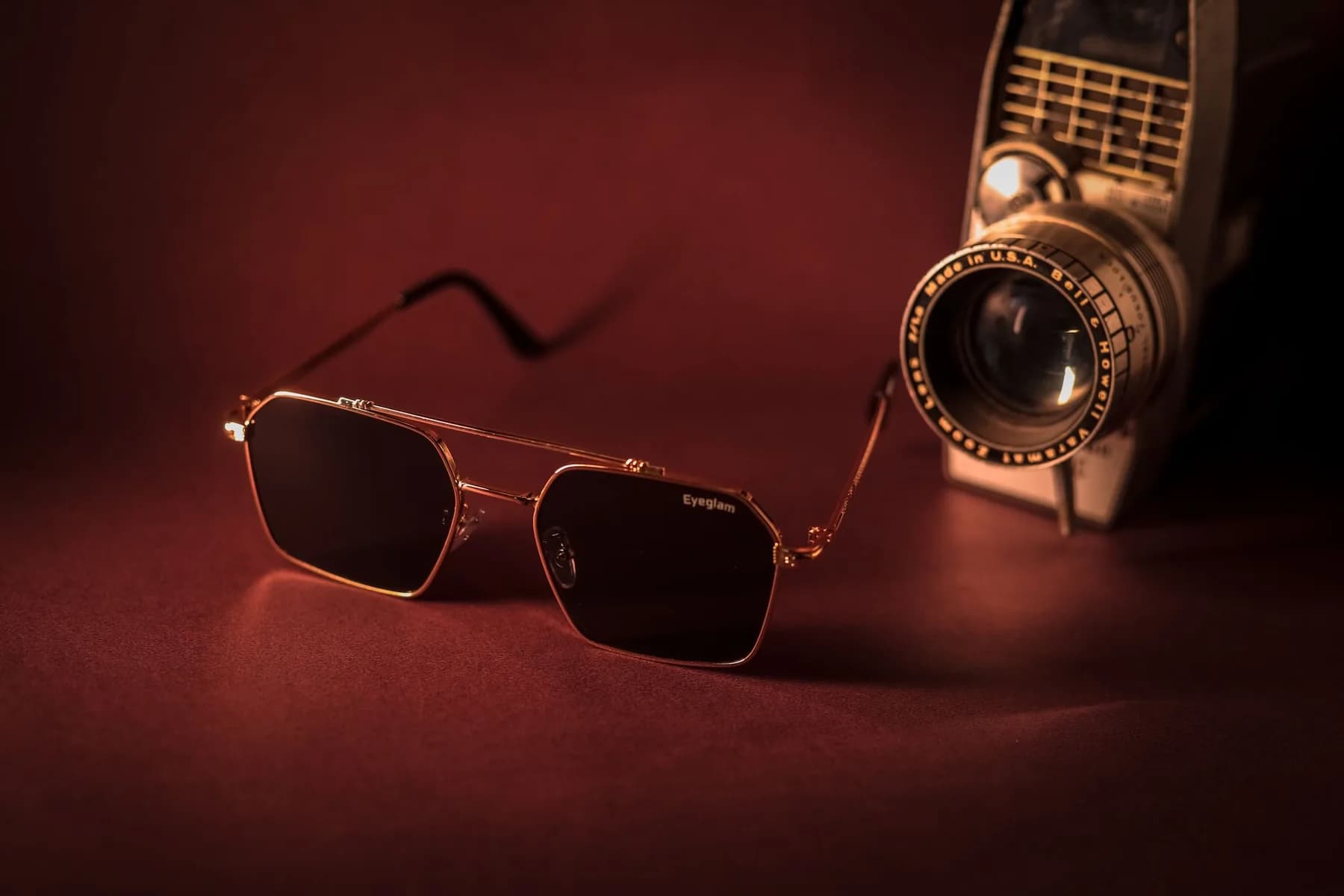
When you walk into an eyewear shop and say you want something classic, or something modern, you have in truth said nothing specific at all — and the assistant will show you what those words mean to them, not what they meant to you. Frame shape names are not marketing inventions. Most of them are geometric descriptions of the lens outline, the position of the rim, and the way the bridge meets the temple arms, and many were born from a practical function long before they became fashion: the aviator was designed for pilots, the wrap for sport, and the browline came from a need for a lighter frame that used less metal. Once you know the vocabulary, shopping turns from randomly trying twenty pairs into a clear request: I want a rectangular full-rim frame with a lens width near 52. In this guide we walk through the core shapes and what distinguishes each one, then through the rim types that change a frame's whole character, and finally through a practical method for choosing when several shapes appeal to you at once.
Why the shape names are worth learning
The first reason is purely practical: the shape decides how much lens sits in front of your eye. A small round frame gives you a shorter field of view towards the bottom, which matters a great deal if you wear progressive lenses that need enough vertical height for the reading zone. Shape also governs how a strong prescription looks: a strongly minus lens thickens at its edges, which is why a small round frame looks far cleaner than a wide oversized one with exactly the same prescription. The second reason is visual: after your own features, the frame outline is the first thing anyone reads on your face, and its sharp or curved lines either balance your own lines or exaggerate them. The third reason is that you will buy another pair one day, and knowing the name of what suited you today saves you from trying to describe it with your hands two years from now.
- Lens height: progressive lenses need enough vertical room, so very shallow frames are a poor match for them.
- Edge thickness: the smaller the shape, the thinner and lighter a strong minus lens will look on your face.
- Side coverage: curved or wrapped shapes block far more light from the sides than flat shapes do.
- Expression: sharp corners read as formal and assertive, while curves read as softer and calmer.
The classic shapes and what sets each apart
Almost everything you will see in a shop traces back to about ten core shapes, repeated in endless variations. The aviator has a teardrop lens that is wider at the top and narrows slightly towards the bottom, usually on a thin double bridge, and it is one of the most adaptable shapes across different faces. The wayfarer is a soft trapezoid with slightly flared upper corners and a thick rim — the shape most people picture when they say classic. Rectangle and square are the plainest and most neutral outlines, and the only difference between them is proportion: a rectangle is clearly wider than it is tall, a square is closer to equal. Round is a full or near-full circle, visually light and quietly intellectual in character. Oval is a circle stretched horizontally, and it is the safest of all because it has no corners to collide with your features. The browline pairs a thick upper rim with a thin metal lower rim or none at all, drawing a line that mimics an eyebrow. The cat-eye lifts its outer corners upward, gently or sharply. Geometric shapes — hexagonal, octagonal, or angular — suit anyone who wants something different without going far. And the wrap or shield belongs to sport, driving, and bright light, where the lens curves with the face to close the gap at the sides.
- Aviator: a teardrop lens on a double bridge, flexible across most faces and good at covering from above.
- Wayfarer: a thick-rimmed trapezoid with slightly raised upper corners, with more presence than a plain rectangle.
- Rectangle and square: the most neutral and work-appropriate, with the rectangle adding angles to rounder faces.
- Round and oval: they soften angular features, and the oval is by far the easiest shape to get right.
- Browline: a heavy top line over a light bottom, combining a formal look with physical lightness.
- Cat-eye: lifted outer corners that draw the eye upward and add a distinctive character.
- Wrap and shield: a curve that follows the face, best for sport, driving, and very bright environments.
Rim type: full, semi-rimless, or rimless
Shape is only half the story; the other half is the rim that surrounds the lens. A full rim encircles the lens on every side. It is the strongest option and the best match for stronger prescriptions, because it hides edge thickness and protects the lens from knocks — and it is the safe choice for anyone who is hard on their glasses. A semi-rimless frame, sometimes called a nylon-cord frame, holds the lens with a rim above and a fine cord below, so it looks visually lighter and leaves the lower field of view unobstructed, though it is less durable and the cord needs replacing after a few years. In a rimless frame the lenses are fixed directly to the bridge and temples with small screws or mounts. It is the lightest and least visible option on the face, but also the most vulnerable to impact, requires lenses made from impact-resistant materials, and does not suit every prescription or every outline, because the lens itself becomes part of the frame's structure.
- Full rim: the strongest, hides lens thickness, and suits hard daily use and stronger prescriptions.
- Semi-rimless: a lighter look and an open lower field of view, but the cord needs periodic maintenance.
- Rimless: the lightest and quietest visually, but it demands impact-resistant lenses and more care in handling and storage.
How to choose when more than one shape appeals
Start from use, not from looks. Ask yourself where you will actually wear this pair most of the time: in front of a screen in an office, behind a steering wheel in midday sun, or during sport. That single question eliminates half the options, because a wrap is excellent for driving and poor for progressive lenses, while a small round frame is elegant in an office and weak protection in open sun. Then look at your prescription: if it is strong, a full rim and a smaller outline work in your favour, and if it is progressive, insist on enough lens height. Only after that does the question of features arrive, and the rule there is simple and needs no complication — angles balance roundness, curves balance sharpness, and the frame width should roughly match the width of your face at the temples. Finally, test it physically: put the frame on, turn your head left and right, and look down. If it slides, touches your cheek, or presses on your temples, it is the wrong pair however good it looked in the mirror.
- Define the primary use first: office, driving, sport, or general wear.
- Check your prescription before the shape, especially with strong powers and progressive lenses.
- Balance the lines: angles with rounder features, curves with sharper ones.
- Test in motion: shake your head and look down before deciding — do not judge from a still mirror.
- Photograph yourself in the frame from the front and the side; a photo is more honest than a single moment's impression.
Common mistakes when choosing
The most repeated mistake is choosing a shape from a picture instead of from your own face: a frame that looked superb on someone else may be ten millimetres wider than your face, and the same shape then becomes an entirely different look. The second mistake is ignoring the bridge, the single most important part for comfort and the least discussed: too wide and the glasses slide down all day, too narrow and they leave marks on either side of the nose. The third is judging a frame before the real lenses go in, because the thin demo lens in the shop tells you nothing about the weight and thickness of your actual prescription. The fourth is chasing trends alone: shapes come and go every few years, but a frame that fits your face and your use stays comfortable for its whole life. That is why it is worth keeping your main pair neutral and saving the bolder experiment for a second one.
- Buying a shape from a photo without checking the size printed inside the temple arm.
- Overlooking bridge width — the leading cause of slipping and of marks on the nose.
- Judging a frame with a demo lens that bears no resemblance to your real prescription's weight.
- Picking a very small shape with progressive lenses, which squeezes the reading zone.
Frequently asked
What is the real difference between a wayfarer and a rectangle?+
A rectangle is a plain four-sided outline with corners at similar angles, while a wayfarer is a trapezoid: wider at the top, slightly narrower at the bottom, with a small lift at the upper corners and usually a thicker rim. The result is that a wayfarer carries more presence and a more casual character, while a rectangle is quieter and better suited to a work environment. If you want a frame that draws no attention, choose the rectangle; if you want the frame itself to have a personality, choose the wayfarer.
Are rimless frames genuinely more fragile, or is that exaggerated?+
They genuinely are, but it helps to know where the weakness lies. The chassis itself, in titanium or flexible metal, can be very tough; the sensitive points are the screw mounts holding the lens, because any twist or drop transfers stress straight to a hole drilled in the lens. That is why rimless lenses are normally made from impact-resistant materials such as polycarbonate or Trivex. If you wear your glasses for fieldwork or sport, a full rim is the wiser choice; if your use is calm and office-based, there is little to worry about.
Is there one shape that suits everyone if I do not want to overthink it?+
The closest thing to it is an oval or a soft-cornered rectangle in a medium size with a moderately thick rim, because it has neither sharp corners nor exaggerated curves and so collides with no type of features. But remember that size matters more than shape: an oval in the wrong size will look worse than a bold shape in the right one. So start from the measurements printed inside the temple of your current pair, if it is comfortable, and build your choice on those.
Does frame shape affect how much sun protection you get?+
It affects how much light leaks in from the sides and above, not the ultraviolet protection itself. UV protection is a property of the lens, and it should be complete in any pair of sunglasses regardless of shape or tint depth. Shape, however, determines coverage: a wrapped or larger frame blocks the side light reflected off asphalt and sand, while a small round frame leaves wide gaps at the sides. So in very bright conditions a wider-coverage shape is preferable even when the lens protection is already there.