Glasses slipping, sitting crooked, or hurting behind the ear? Everything about frame adjustment
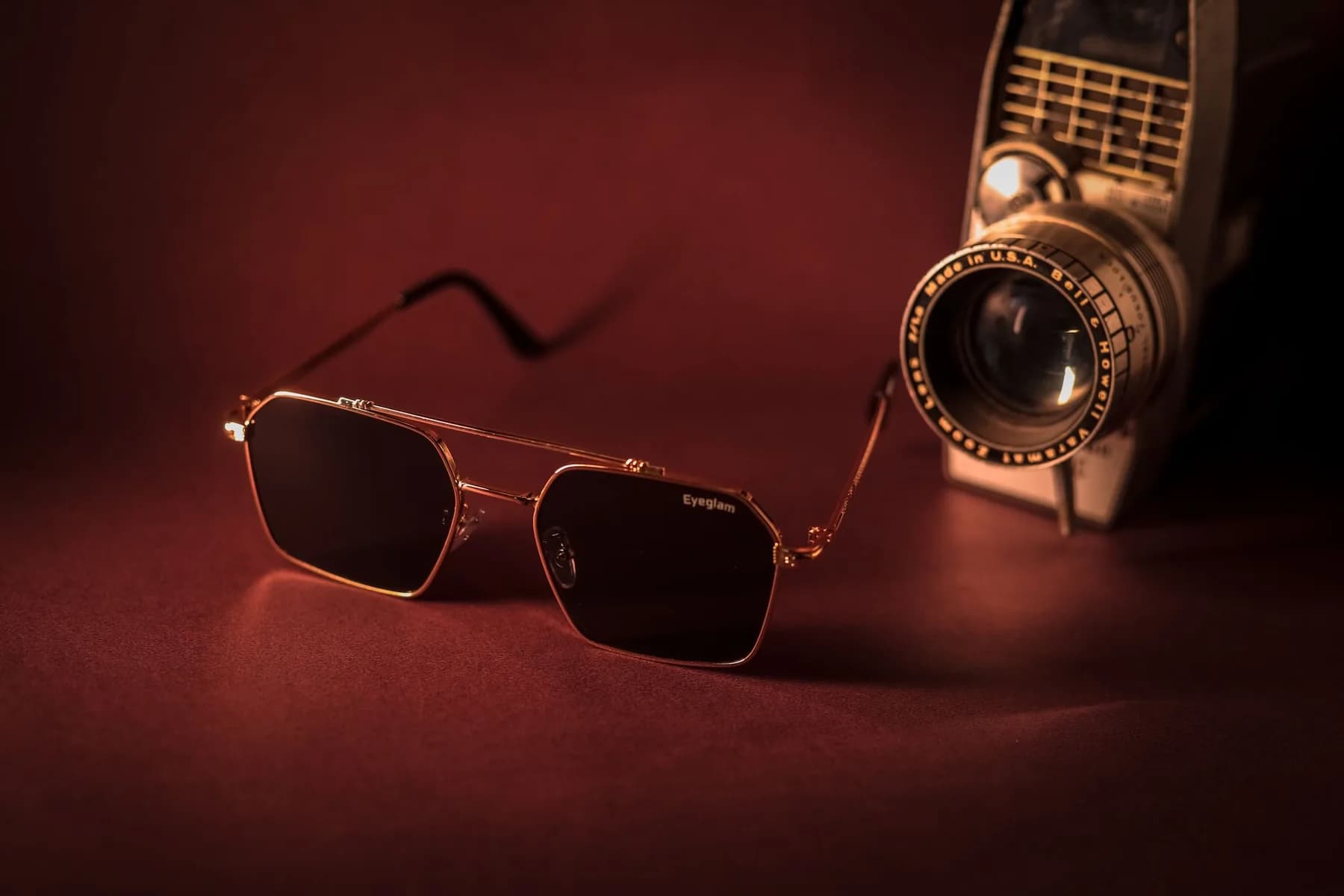
It is curious that what irritates people most about their glasses often has nothing to do with lens quality or the accuracy of the prescription. The pair that slides down the nose every five minutes, that looks tilted in every photo, that leaves a sore red line behind the ear after two hours of wear — these are all problems with the frame alone and with how it sits on the face. Stranger still, most of them are solved in two minutes at an optician with simple tools and usually at no cost, while the owner spends months living with the annoyance or buys a new pair believing the product itself is at fault. A frame is by nature a flexible object, designed to be bent and tuned to one particular face, not a rigid item that leaves the factory in its final shape. That means two things: it will drift out of alignment with daily use no matter how careful you are, and it can be brought back into alignment whenever you like. In this guide we go through why alignment is lost, the signs that your pair needs it now, what the technician is actually doing behind the counter, and where your role ends and theirs begins.
Why a frame drifts out of alignment in the first place
Glasses rest on your face at just three points: the bridge of the nose and the two bearing points behind the ears. Those three points carry the weight of the frame and both lenses all day, and any small change in one of them shows up immediately in the other two. The commonest cause of lost alignment is removing the frame one-handed: when you pull it off by a single temple arm you twist the whole frame around its axis, and repeating that hundreds of times gradually breaks the symmetry of the two arms until one sits wider than the other and the pair tilts. The second cause is heat, and that is a daily matter here in particular: leaving glasses in a parked car under the sun softens acetate and lets it stretch and lose its shape, and a single day can be enough for a pair to come back looser and more prone to sliding than it was. The third is sleeping or sitting on them — a common accident that produces an obvious twist in a single moment. The fourth is gradual wear in the small parts: nose pads harden and lose their grip, screws loosen with use, and the plastic tips on the ends of the arms shrink. None of this is a manufacturing defect; it is the natural result of an object put on and taken off dozens of times a day.
- Removing them one-handed: the fastest way to twist a frame and unbalance the two arms — using both hands removes the problem entirely.
- Heat inside a car: softens acetate and widens the frame, and is the most common cause of sudden slipping in summer.
- Sleeping or sitting on them: an instant twist that needs professional alignment rather than a home fix.
- Hardened nose pads and loosened screws: gradual wear appearing after months, with cheap and quickly replaced parts.
- Pushing glasses up onto the top of the head: continually widens the arms, because the skull's circumference is far greater than the width of the face.
Signs that your glasses need adjusting now
Most people adapt to a badly aligned pair rather than notice it, because the decline is slow and happens over weeks. The simplest test is to place the glasses on a perfectly flat surface and look at them from the front and the side: the tips of both arms should touch the surface together, and the line of the lenses should be parallel to it. If one tip lifts, or the lens line tilts, the frame is twisted and needs alignment. In front of a mirror, look at the gap between your eyebrow and the top edge of the frame on each side; if the two are unequal, the pair sits crooked on your face. The physical signs are the clearest of all: a deep red mark on both sides of the nose means the entire weight is landing on the bridge and none of it on the ears; pain behind the ear means the arm bends too early or too late relative to the right point; and a mild ache in the temples by the end of the day means the arms are narrower than the width of your head. There is also a visual sign many people miss: if the frame has dropped from its original position you are no longer looking through the centre of the lens, and that alone is enough to tire the eye and produce a faint blur its owner mistakes for a change in their sight — an effect at its greatest with progressive lenses, where every zone depends on sitting at a specific height in front of the pupil.
- The frame will not sit level on a table, or one arm tip lifts off the surface.
- The gap between eyebrow and frame edge is unequal on the two sides in the mirror.
- A deep red mark on the nose, pain behind the ear, or pressure at the temples by day's end.
- Repeated slipping that has you pushing the frame up with a finger dozens of times a day.
- Faint blur or unexplained strain, especially with progressive lenses, because the lens has dropped below its correct height.
What the optician actually does
A professional adjustment is not bending a frame at random until it settles; it is tuning four specific things in a known order. The first is the levelness of the frame itself: the technician confirms that both lenses lie on one plane and that the two arms are symmetrical before anything else, because starting from a twisted frame means every adjustment after it is wrong. The second is the forward tilt — the angle by which the lens leans slightly down towards the cheek. That angle is not cosmetic; it keeps the plane of the lens perpendicular to your line of sight when you look forward and down, and it is set by bending the arm where it meets the frame front. The third is the bend of the arm behind the ear, which is what actually prevents slipping: the technician warms the plastic tip slightly and shapes it to follow the contour behind the ear without pressing on it. The fourth is the bridge or the nose pads: on metal frames the two pads are bent closer together or further apart, which raises or lowers the frame in front of your eye and spreads the weight evenly. The tools for all of this are simple — pliers coated in a non-scratching material, a warm-air unit, fine screwdrivers — and a trained hand that knows how much each material will take before it breaks. That last point in particular is what makes this their job rather than yours.
- Frame levelness: it precedes every other adjustment, and without it the remaining steps are built on a crooked base.
- Forward lens tilt: keeps the lens plane perpendicular to your line of sight, affecting quality of vision and not just looks.
- The bend behind the ear: this is what genuinely holds the glasses, and it is shaped with heat rather than cold bending.
- Nose pads: they set the frame's height in front of the eye and the weight distribution, and replacing them when they harden is routine.
What to do yourself and what never to touch
There is a small safe space for home adjustment, and its boundaries are clear. A loose screw at the hinge can be tightened with a small eyeglass screwdriver, and this is the most useful home repair of all because it fixes a looseness that many people misread as a twist. A metal nose pad can be gently squeezed closer or eased apart with the fingers by a very small amount to raise or lower the frame slightly. Plastic tips for the ends of the arms are sold ready-made and fit without tools, and they are a good fix for a pair that has started slipping because the old tips have shrunk. Beyond that, stop. Never bend an acetate frame while it is cold: the material snaps rather than bends, and a break at the hinge usually cannot be repaired. Never heat a frame with boiling water, a lighter, or a hairdryer on its highest setting — excess heat distorts the frame, damages lens coatings, and can loosen the lenses in their rims. Do not try to correct a visible twist with your hands, because straightening the tilt on one side creates an opposite tilt on the other unless both points are measured together. And never adjust a frame holding progressive lenses yourself, because shifting the lens height in front of the eye by a few millimetres throws off the viewing zones calculated for it. The practical rule: if the repair needs force or heat, it is not yours; if it needs a small screwdriver or a spare part, it is.
- Safe: tightening a hinge screw with an eyeglass screwdriver, replacing arm tips, and moving a metal nose pad by a tiny amount.
- Forbidden: bending a cold acetate frame — it snaps at the hinge instead of bending.
- Forbidden: boiling water, lighters and hot hairdryers, which damage lens coatings and distort the frame.
- Forbidden: adjusting a frame with progressive lenses yourself, because lens height in front of the eye is calculated to the millimetre.
- When in doubt: an adjustment at an optician takes a few minutes and is usually free — far cheaper than a broken frame.
How to keep the alignment once you have it
Most of what knocks glasses out of alignment is a set of small daily habits, and changing them costs nothing. Always remove your glasses with both hands, holding both arms together; that habit alone markedly reduces twisting. Do not push them up onto the top of your head, because doing so gradually widens the arms until they can no longer grip your face at all. Put them in their hard case when you are not wearing them, and never rest them face-down on their lenses on a table. And in our long summer in particular, never leave glasses in a parked car: the heat of a closed cabin is enough to change a frame's shape and damage lens coatings within hours, and it is one of the most common reasons here for a pair that ‘suddenly started slipping’. Visit an optician for a quick alignment roughly every six months even if you have noticed no problem, because they catch the slow decline before you have adapted to it, and will tighten screws and replace hardened pads in the same visit. And if you wear your glasses all day in work that involves movement or repeated bending, ask about rubber arm tips or silicone nose pads; they dramatically improve grip for a very small cost and save you from pushing the frame up every minute.
The conclusion is that glasses are not something bought once and then left alone; they are worn on a moving face for ten hours a day and need recalibrating from time to time, much as a car needs its wheel alignment checked. And when a pair sits where it should, the gains go beyond comfort: your eye looks through the centre of the lens where its optical design performs best, the frame's weight is shared between nose and ears instead of concentrating at one point, and that repeated involuntary push of the frame with a finger disappears — which is, incidentally, the single biggest source of scratched lenses and loosened screws. So if you have been living for months with a pair that slips or hurts, the answer is most likely two minutes at the nearest optician, not a new pair of glasses.
Frequently asked
Is adjusting glasses at an optician free?+
Usually yes, especially if you bought the glasses from that shop, since most opticians treat adjustment as part of after-sales service and charge nothing for it. And even when the pair is not from them, many will still adjust it as a small courtesy, because it takes only a few minutes and consumes no materials. Only replacement parts may be charged for — nose pads, arm tips, or a replacement screw — and those are typically inexpensive. Do not hesitate to ask, and do not feel you are requesting a big favour; this is an entirely routine task an optical technician performs dozens of times a day. More importantly, it protects you from the worse options: attempting the adjustment yourself and breaking the frame, or buying a new pair for a problem that has nothing to do with the lens or the prescription.
My glasses leave a red mark on my nose — what is the fix?+
A deep red mark on both sides of the nose means the entire weight of the glasses is landing on the bridge and none of it on the ears. The cause is usually one of three: the bend of the arms behind the ears is insufficient so they do not hold from the back, the nose pads sit too close together and press on a small area, or the frame is heavier than your nose bridge can carry. For the first two, the fix is a simple adjustment at the optician — easing the pads slightly further apart to spread pressure over a larger area, and reshaping the arm bends so they take part of the weight. If the frame really is heavy, the options are practical: wider silicone pads to distribute pressure, lighter lens material such as polycarbonate or high-index if your prescription is strong, or a lighter frame at your next change. Ignoring a red mark for a long time causes skin pigmentation and sometimes local irritation, so it is better dealt with early.
How often do my glasses need adjusting?+
There is no fixed interval, because it depends on how you use them more than on time itself, but a reasonable practical rule is a quick adjustment roughly every six months for anyone wearing glasses daily — and tying it to your annual sight test makes it a habit you will not forget. Someone working in heat, moving about a lot, or taking glasses on and off dozens of times a day will need it more often, perhaps every three months. Someone wearing them for limited hours at a desk may manage with once a year. More important than any schedule, though, is watching for the signs: the moment a pair starts slipping, a new mark appears on the nose, or you notice a tilt in a photo, that is the time to have them adjusted regardless of your last visit. Do not wait for the problem to grow, because a frame left twisted for a long time becomes harder to realign, especially a metal one that has set into the wrong shape.
Can any frame be adjusted, or are some of them impossible to adjust?+
Most frames can be adjusted, though to differing degrees. Metal frames are the easiest, because they bend and return under a skilled hand and their nose pads can be moved and replaced; they offer the widest scope for adjustment. Acetate is tuned with controlled heat rather than cold bending, and its range is narrower but usually sufficient. Titanium can also be adjusted, but it resists shaping more and holds its original form strongly — an advantage and a drawback at once. The frames that genuinely resist adjustment are those made of fully flexible materials, such as certain sports plastics that always spring back to shape; very cheap frames that break at any attempt; and frames without separate nose pads, where the bridge is part of the front itself and cannot be widened or narrowed. For exactly that reason it is worth trying a frame's fit properly at the point of purchase, rather than relying on adjustment to solve everything later.